1957 Thunderbird D-Code 312: Upper Engine Freshen-Up and Heat Crossover Elimination

One of the ongoing goals with my 1957 Thunderbird has been improving reliability and drivability while preserving the original character of the car. The engine has always run well, but after nearly seventy years of service, a few oil leaks had begun to appear, and I wanted to address some underhood heat issues that are common with Ford's Y-block engines.
What began as a gasket replacement project evolved into a complete upper-engine freshen-up that included sealing several common leak points, refinishing the engine, and making a few practical heat-management modifications designed to improve warm-weather performance.
The Starting Point
The engine was running strong and performing well, but several minor oil leaks had developed over time. Since the intake manifold needed to be removed, it seemed like the perfect opportunity to address both sealing and heat-management concerns at the same time.
The following gaskets were replaced during the project:
Valve cover gaskets
Valley pan gasket
Intake manifold gaskets
Distributor gasket
Thermostat water inlet gasket
For the valve covers, valley pan, and thermostat housing, I applied Permatex Form-A-Gasket to both sides of each gasket.
For the distributor gasket, sealant was applied only to the block side to help hold the gasket in place while still allowing easier removal in the future.
Why I Chose to Block the Heat Crossover
One factor that influenced this project was the carburetor currently installed on the engine.
The Thunderbird is equipped with a Holley carburetor utilizing an electric choke. The original intake heat crossover system was designed to help warm the intake manifold and support engines equipped with heat-operated choke systems. Since my carburetor no longer relies on exhaust heat for choke operation, the crossover system was no longer providing the same benefit it once did.
Living in Arizona, reducing unnecessary intake heat made sense. The goal was to lower intake manifold temperatures, reduce fuel evaporation after shutdown, and minimize fuel odor during hot-weather operation.
Blocking the Intake Heat Crossover
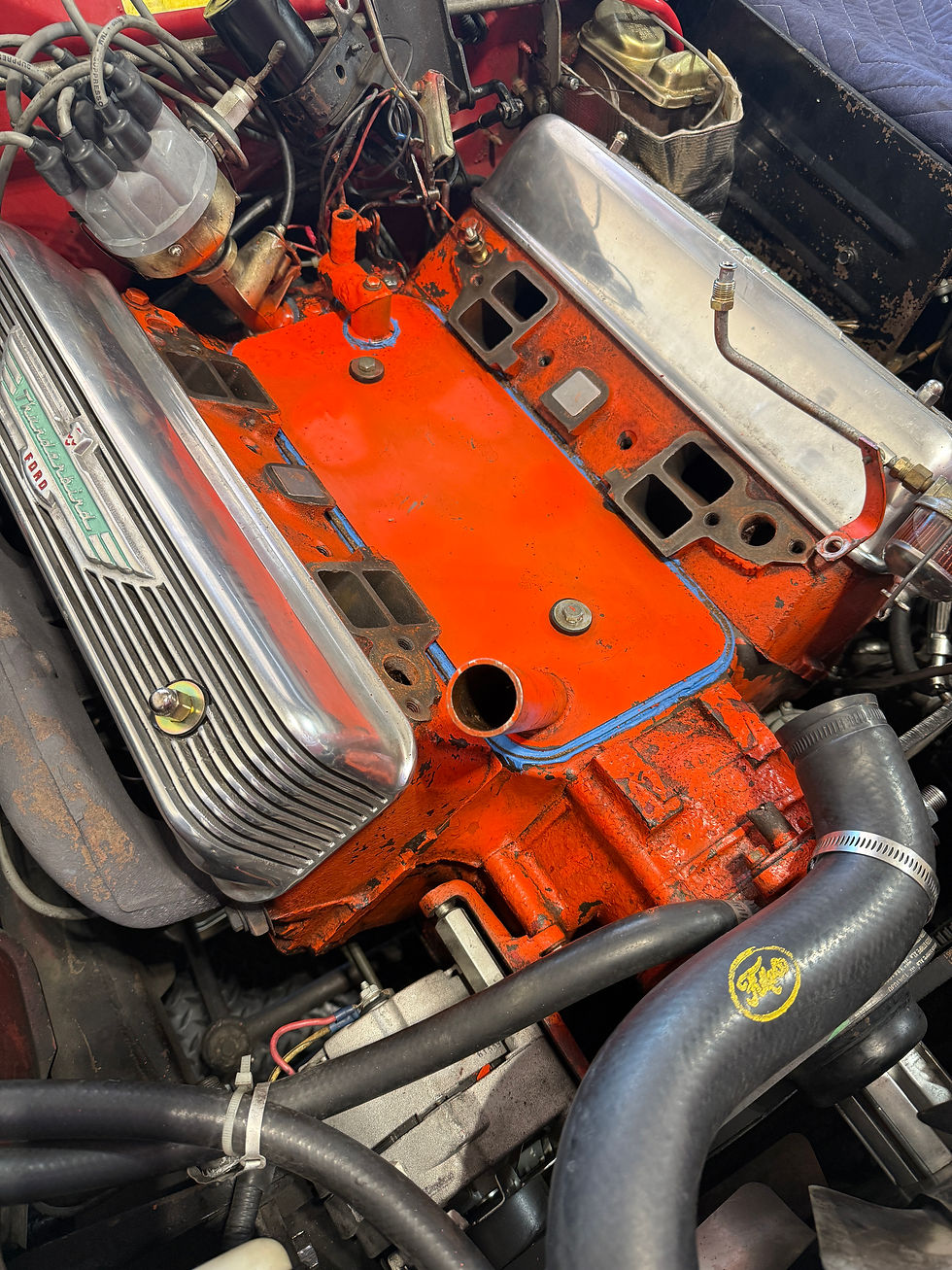
To eliminate exhaust heat from the intake manifold, I fabricated two block-off plates from 22-gauge steel, each measuring approximately one inch by one inch. The corners were rounded and all edges carefully deburred. The plates were intentionally made slightly smaller than the overall gasket sealing surface to avoid interfering with gasket crush or intake manifold clamping.
A light coat of Permatex Copper Spray-A-Gasket was applied to the back side of each plate. The spray was used primarily as an adhesive to hold the plates in position over the crossover openings during intake manifold installation.
The intake manifold gaskets were also treated with a light coat of Permatex Copper Spray-A-Gasket on both sides. This helped hold the gaskets in place during assembly and provided an added measure of sealing confidence.
The intake manifold was then carefully lowered into position and torqued according to specification.
Heat Riser Modification
Since the intake crossover ports were now blocked, there was no longer any need for the factory heat riser system to direct hot exhaust gases toward the intake manifold.
The heat riser valve, located in the passenger-side exhaust manifold, was disabled by removing spring tension and wiring the valve in the fully open position. This allows unrestricted exhaust flow and eliminates unnecessary backpressure associated with the warm-up system.
Existing Heat Management Components
The engine already utilized a phenolic carburetor spacer as part of a PCV conversion. This spacer provides additional insulation between the intake manifold and carburetor, helping reduce fuel temperature and heat transfer.
The final configuration now consists of:
Holley carburetor with electric choke
Phenolic PCV spacer
Intake heat crossover block-off plates
Heat riser valve wired fully open
Refinishing the Engine
With the intake manifold removed and the upper engine disassembled, I decided it was the perfect time to refinish the top side of the engine.
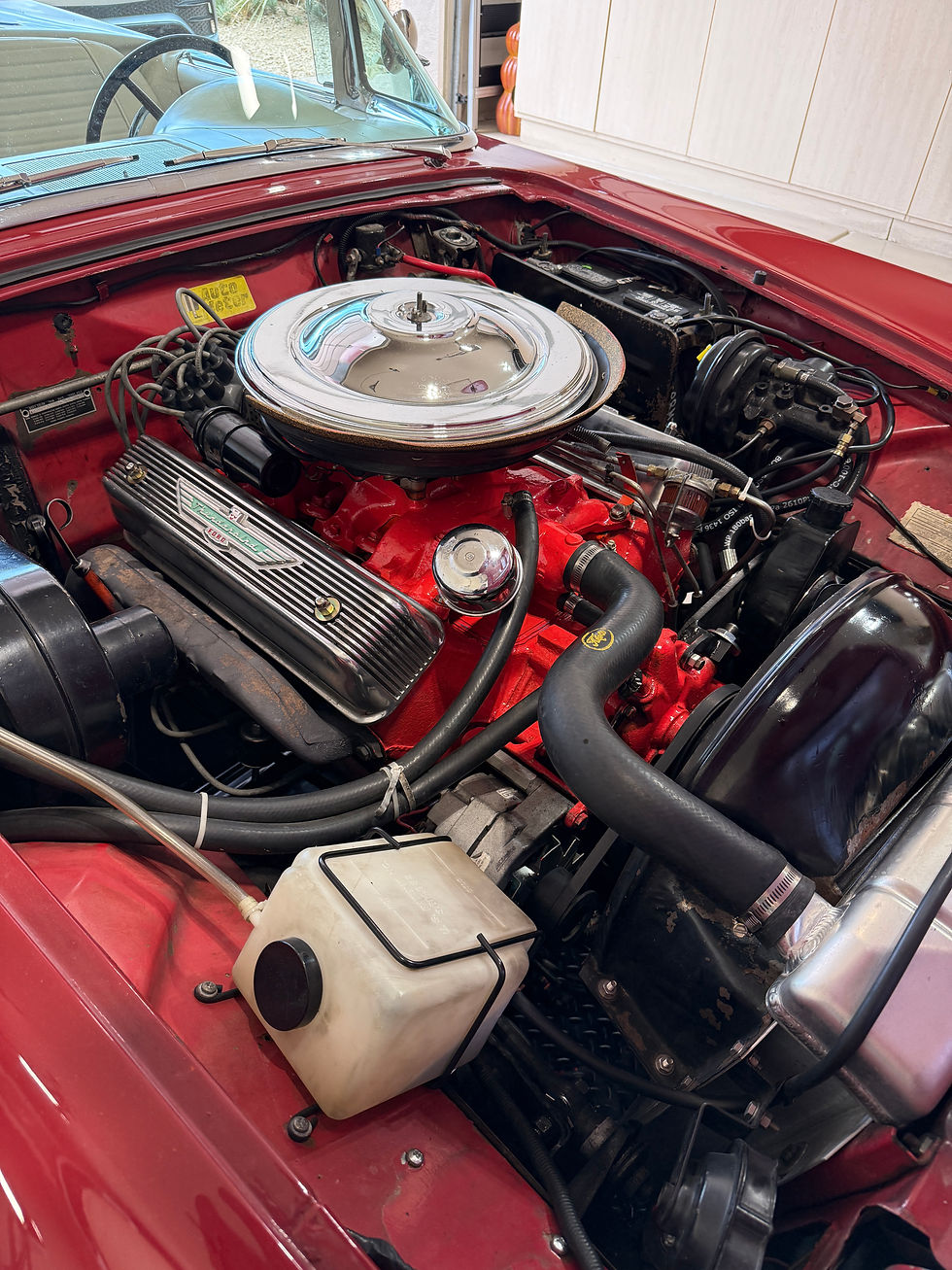
After thorough cleaning and preparation, the engine was repainted using Thunderbird Red engine paint. The fresh paint dramatically improved the appearance of the engine compartment while maintaining a factory-inspired look.
The goal was not to create a concours restoration, but rather a clean, well-maintained engine compartment that reflects how the car is actually driven and enjoyed.
Results
After reassembly, I made minor adjustments to ignition timing and leaned the idle mixture slightly.
The results have been extremely encouraging.
Reduced Oil Leaks
The most obvious improvement has been a noticeable reduction in oil leakage. While I am continuing to monitor the engine, the combination of fresh gaskets and careful sealing practices appears to have significantly improved the situation.
Reduced Fuel Odor
One of the primary goals of blocking the intake heat crossover was reducing fuel smell after driving.
The difference was noticeable almost immediately. After shutdown, there is considerably less fuel odor than before. This suggests the intake manifold and carburetor are retaining less heat and reducing fuel evaporation after operation.
Cold Start Characteristics
There is a slight difference in engine tone immediately after a cold start. The change is subtle and disappears completely as the engine reaches operating temperature.
Other than that, drivability remains excellent and the engine performs exactly as it should.
An Unexpected Improvement
The biggest surprise from this project had nothing to do with oil leaks or heat management.
Prior to the work, the brake pedal had a small amount of soft travel when initially applied. The brakes would engage lightly at first and then become noticeably firmer with additional pedal pressure.
After completing the project, that soft initial pedal travel disappeared.
The brake pedal is now firm from the beginning of pedal application and provides a more confident feel during braking.
I cannot say with certainty what caused the change, but my best theory is that the intake removal, gasket replacement, timing adjustment, idle mixture adjustment, and elimination of minor vacuum leaks improved manifold vacuum and brake booster performance.
Regardless of the cause, the improvement was both noticeable and welcome.
A Project Within Reach of Most Hobbyists
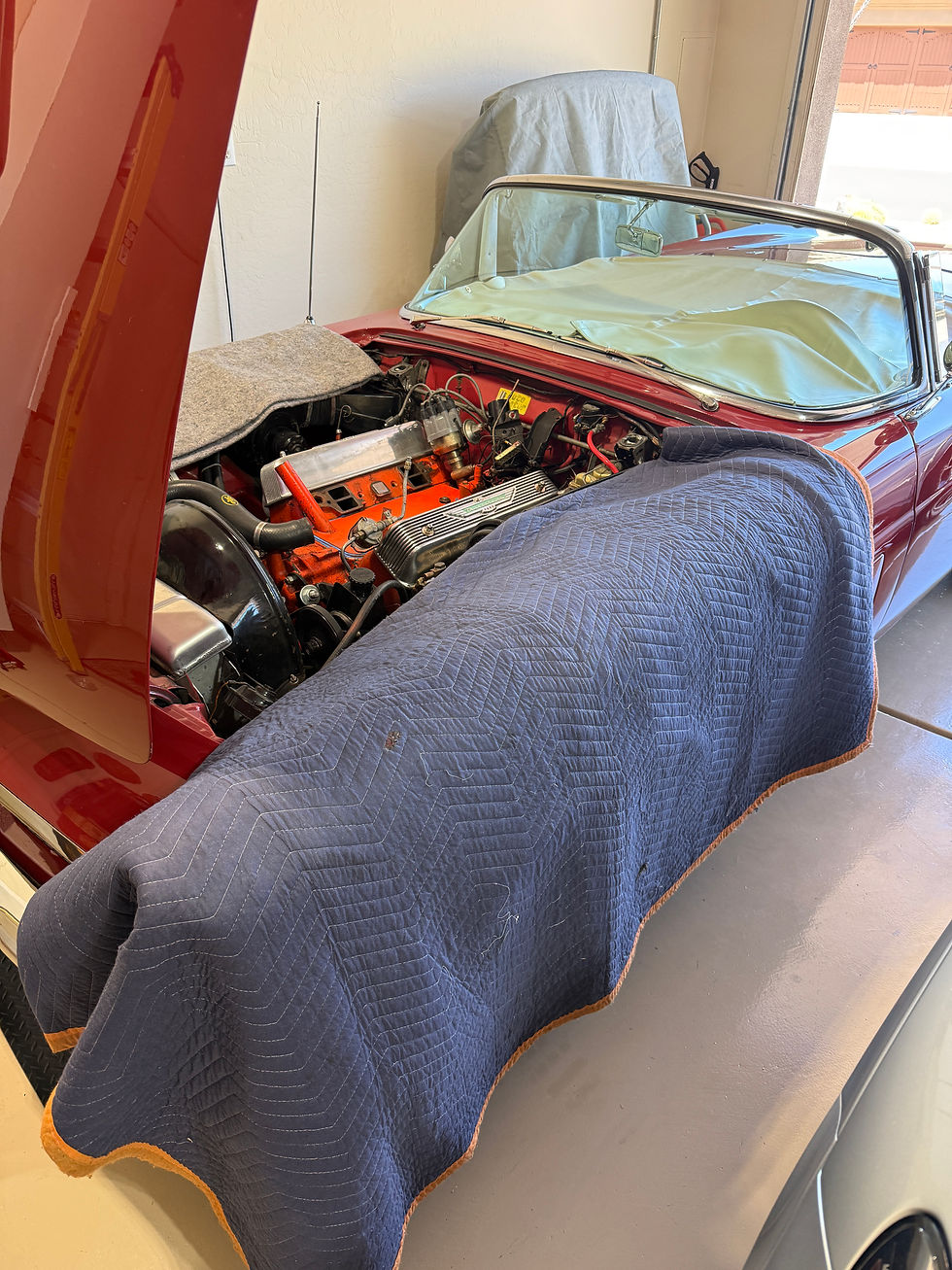
One aspect of this project that may encourage other Thunderbird owners is that all of the work was completed at home in a standard two-car garage using common hand tools and moderate mechanical skills.
No specialized equipment was required, and the project was completed at a relaxed pace over several days.
Including gaskets, sealants, paint, and miscellaneous materials, the total cost of the project came in at less than $300.
The results far exceeded the investment. In addition to improving the appearance of the engine compartment, the project reduced oil leaks, lowered fuel odor after driving, improved brake feel, and enhanced overall driving satisfaction.
For anyone considering similar work on a Y-block Thunderbird, this project demonstrates that meaningful improvements can be achieved without a large budget or professional shop facilities.
Final Thoughts
This project accomplished everything I hoped it would.
The engine compartment looks significantly better, oil leaks appear to be reduced, fuel odor after driving has decreased, and the car continues to run exceptionally well. The heat crossover modification, combined with the electric choke Holley carburetor, phenolic carburetor spacer, and open heat riser valve, appears to be an effective solution for managing intake heat in a warm climate.
Perhaps the most satisfying part of the project is knowing that it was completed at home with basic tools, patience, and a willingness to learn. The improvements were significant, the cost was modest, and the Thunderbird remains exactly what it was intended to be—a car that is meant to be driven and enjoyed.
Sometimes the most rewarding projects are not the ones that completely transform a car, but the ones that make an already enjoyable car just a little bit better.






Comments